Showing posts with label Museum. Show all posts

Tuesday, 6 October 2015

Bavarian Army Museum - Napoleon and the Bavarians

After this weekend some kind of autumn cold grapped our family and all of us were rather weary we're all getting better now and so I found the time to sort the pictures from my visit at the Bavarian Army Museum in Ingolstadt. Currently they're running a special exhibition about Napoleon and the Bavarians there and so my buddy Rick and I took the trip to Ingolstadt.

The museum itself is wonderfully located in Ingolstadt's old city centre and is occupying the New Castle there. Usually there's is a permanent exhibition about the history of the Bavarian Army running but currently it had to make way for the above mentioned Napoleonic exhibition. It is more politically and socially oriented then I expected in an ARMY museum but nevertheless an excellent trip and a lot of extremely interesting pieces to examine. Unfortunately the lighting was pretty dark. Probably best for the old pieces and rather comfortable for the visitors but honestly doom for taking pictures. Therefore most of my photos turned out blurry or darkish. But anyway some are more or less presentable.

Of course the exhibition started with the Korsikan guy all the trouble was about two centuries ago:
Napoleon in his coronation robes
Napoleon in Egypt

Thursday, 1 October 2015

Visiting Marienberg Fortress Würzburg

Here we go again, time for part one of my coverage of our trip to Würzburg. Most important we spent a couple of wonderful days with two of our oldest and dearest friends. Their hospitality was outstanding and we enjoyed to be with them once more. Unfortunately little Anna refused to sleep as calmly as usual. As her larger sister a couple of years ago she seems to be sick of the portacrib.
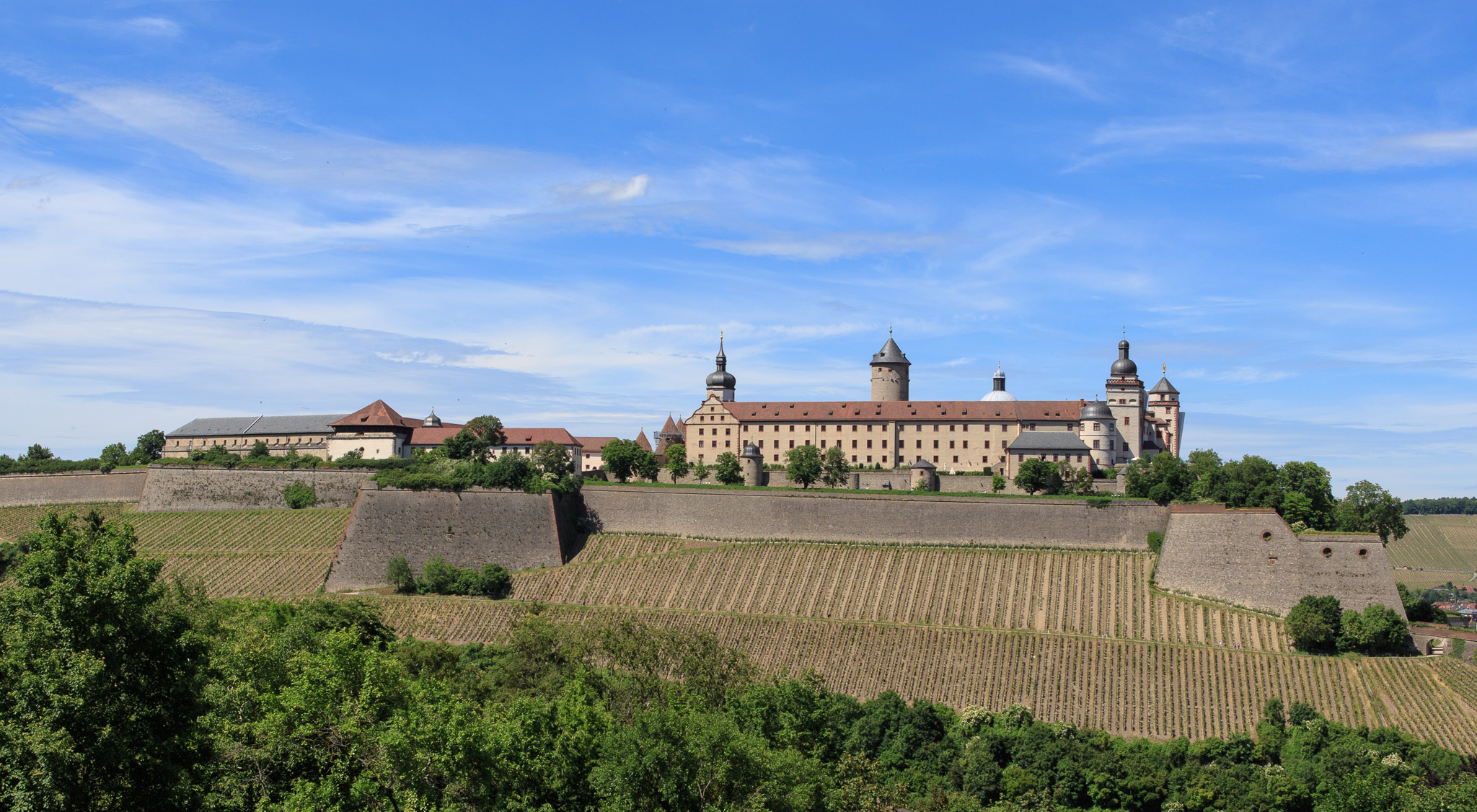
Marienberg Fortress southern side (picture from Wikipedia)
Under those wonderful conditions we undertook two trip which might matter to you. Thus first for our trip to Marienberg Fortress which is lying above River Main opposite to Würzburg city. The oldest parts of the castle were built by Konrad von Querfurt who was bishop of Würzburg during those days. Interestingly its main purpose was to protect himself against the defiant population of Würzburg who wasn't always eagerly accepting the orders and taxes the bishops imposed on them. The last reminder of the old castle that burnt down during the 16th century or was converted to more modern architecture is the keep in the middle of the fortress:
The old castle keep. Left hand there is the newer chappel of Marienberg Fortress.
Thus most of the fortress is much younger. It has a very turbulent history during which it was attacked and besieged several times. For example unsuccessfully during the German Peasant's War in 1525, successfully during the Thirty Years' War in 1631 and once again successfully during the Prussian Main Campaign in 1866. Simoultaneously it was residence of the bishops of Würzburg and prison during the witchcraft trials. All in all a really interesting place but its decent history would go beyond the constraints of this humble article.

However nowadays most of the structural parts of the fortress date back to the great renovation and expansion performed under guidance of Prince-bishop Julius Echter von Mespelbrunn (16th century) and Archbishop-Elector Johann Philipp von Schönborn (17th century):
Schönborn Gate named after the influential bishop.
Echter Gate named after the other builder of the modern parts of the fortress.
Princes' Building with museum, restaurant and conference centre.

Thursday, 13 August 2015

Visiting Celle - Part 2 - Waterloo diorama and Celle's city centre


Part 1 is here.

Although it was very exciting and interesting to roam between the historical exhibition pieces the centrepiece of the exhibition was a huge, two-piece diorama of the battle of Waterloo. It was built by a group of German wargamers and consists of about 15,000 28mm miniatures. Frank one of the organisers gave some details about the diorama on his blog 'Figuren und Geschichten' but honestly you don't get an idea of its size when you haven't seen it. Thus with no more ado to the pictures (please click to enlarge):
Viktoria and me observing the French cavalry charge.

French heavy cavalry (Carabiniers) on the charge.

Tuesday, 11 August 2015

Visiting Celle - Part 1 - Exhibition KGL at Waterloo

Last week we spend a couple of days with my aunt and took the chance for a day trip to Celle. Celle is a town of about 70,000 citizens in Lower Saxony and besides its wonderful castle Celle inhabits the Bomann Museum. Currently there's an exibition about the Hanoverian and KGL troops at Waterloo taking place which caused my interest. Thus we met there with a dear friend of ours. Viktoria, Niclas and me spent a couple of interesting hours between exciting exhibition pieces and countless 28mm miniatures.
Niclas, Viktoria and me in front of the museum.
The exhibition is accomodated in the cellar of the Bomann Museum and admission is really fair with 5 EUR (app. £3.50) for adults for the whole museum. The special exhibition itself covers one large room which is dominated by the huge diorama made of 15,000 28mm miniatures. Alongside there are a lot of glass cabinets with exhibition pieces and a lot of pictures on the walls. All of them precisely described (though in German only) which makes it rather easy to follow the common threat. Here's a small selection of some of the pieces. Unfortunately the glass of the cabints proved really reflective. Maybe because of the soft lighting. Anyway feel free to click the pictures to enlarge them:
Colour Sergeant of the 7th Line Battalion KGL
Altogether they have a wonderful selection of uniforms there. Especially outside the UK it seems rather difficult to get a view of British uniforms but since the KGL used more or less the same dress code the chance in Celle was unique for me. Although there are some excellent books about the KGL and British uniforms of the Napoleonic wars it's priceless to see the pieces in reality.
Sergeant of the grenadier company of the 4th Line Battalion KGL

Tuesday, 7 July 2015

Walk through medieval Neuss

Last week sweltering heat kept me away from the workbench. Although I tried some brushstrokes on the hussars I'm working on nothing presentable came together. Over 34 °C was simply too much for me.

Anyway last weekend was dominated by another event which a dear club fellow of mine prepared weeks ago. Under Kalle's guidance we took a walk on the scent of medieval Neuss. Neuss is a city on the west bank of the river Rhine opposite of the Renish pearl Düsseldorf with about 150.000 inhabitants. It's mentioned in sources from more than 2.000 years ago and therefore holds the title of 'Germany's oldest city' alongside the city of Trier
For us the medieval part of its history became interesting when a couple of THS fellows applied their attention to the Burgundian Wars. As part of the Charles the Bold besieged Neuss for ten months from 1474 to 1475 but lost against the brave and persistent Rhinelanders. Employing the wonderful 28mm ranges available for the Wars of the Roses (e. g. Perry Miniatures excellent plastic sets) we're going to present a part of this siege sooner or later and thus we tried to get an idea of the old city wall.

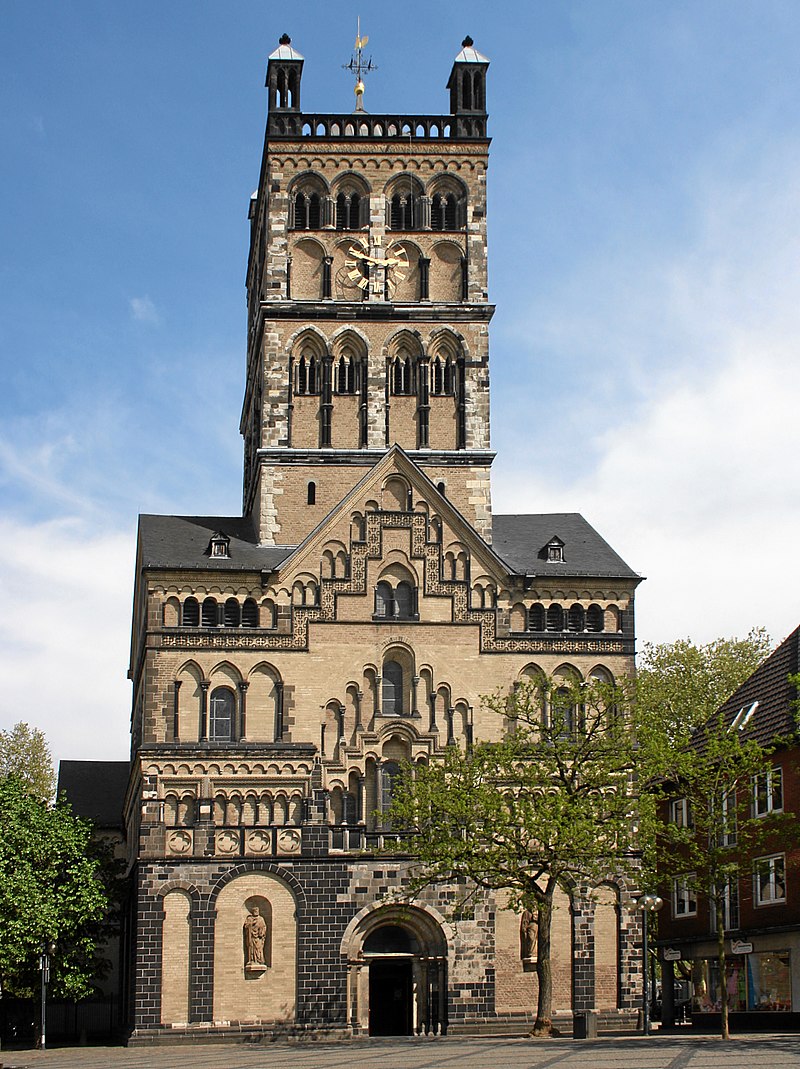
Thus we started our tour at Saint Quirinius Minster right in the middle of 15th century Neuss. It's one of the most important late romanesque churche in the Lower Rhine region and has been watching Neuss's history for more than thousand years. It was one of the sanctuaries of the citizens during the siege of 1474/75 and  source of hope during those painful months.
Picture from Wikipedia
Then we walked to the city hall. It's a lot younger than the minster but around it the city festival 'Zeitsprünge' (time leaps) took place. A couple of reenactors presented some steps of Neuss's history from the stone age to the 20th century there. Small but very nice.
Volunteers that fought Napoleon

A fellow from Lützow Free Corps
After this little detour we picked up the scent of the Middle Ages again. And found one of the oldest houses in Neuss's old town. Although it's younger than 1475 it gives an idea of the timber framed architecture of the 15th and 16th century:
From 1586
During the next two hours we followed the city walls and found a couple of remains. Especially the Obertor (upper gate) is worth a visit. It's preserved in more or less the same shape that it had six hundred years ago. Only at the frontage you see the imprints of early 20th century restoration work. A pity on the one hand but on the other hand it saved this imposing structure.
Obertor
Along the old city wall there are a couple of bronze sculptures. They show the look of the old city gates and explaine their fate. For example the Hamtor (Ham-gate):
Historical 'Hamtor'
Thus we had a wonderful walk through Neuss and got an idea of its medieval size. Unfortunately there's nothing left of the old battlefield because Neuss grew over it's historical boundaries long ago. Funily we met a well known Corsican who was up to mischief in early 19th century Neuss:
But the climax of the day was our visit of the Clemens Sels Museum. It's inhabiting a large number of exhibits from Stone Age and Roman artifacts right up to a decent number of modern paintings. The latter are not my cup of tea but the medieval exhibits are simply excellent. It covers the medieval part of Neuss's history and explains its importance at that time. They have a lot of finds from the siege of Neuss which are presented one of the turrets of the Obertor:
Heads of crossbow bolts.

Spurs found on the battelfield

A 16th century Bartman jug

A 15th century stone canon ball
Most eye-catching pieces of the exhibition are three dioramas covering scenes from the siege of Neuss. They are made of excellently painted flat figures and provide a lot of wonderful little scenes. One of them shows Charles's headquarter while the other two recreate the bombardment of the city as well as a brave foray of the defenders. Here are some impressions:
The bombardment

Burgundian mercenaries

The Burgundian headquarter

The English detachment among the Burgundians

Bungundian nobles gathering.

One of the smaller Burgundian guns.

Camp life

Neuss daring one of its many forays

Crossbowmen from Neuss

Men at arms attacking one of the Burgundian camps

A Burgundian knight somehow puzzled.
So after about three and a half hours our tour ended with coffee and ice cream at our fellow Axel's house. Really the crowning moment of a wonderful day. We all enjoyed the walk very much and even eagar Mrs Monty was impressed by her humble husband's hobby this time. Finally she took a picture of the three gentlemen she spent the day with:
left to right: The humble author, Axel our later host and Kalle our well-read guide
In case that you're intrested in the history of Neuss then have a look here (German only):
http://karl-heinz-burghartz.de/alte-neusser-stadttore/hamtor/http://karl-heinz-burghartz.de/alte-neusser-stadttore/hamtor/

Especially how a small city brought the mighty Duke of Burgundy about his downfall is a very interesting one. Really worth a wargaming coverage which a wargaming friend from our club is preparing for one of the years to come.

Friday, 22 May 2015

Visiting the German Navy Museum...

A awesome week of holiday is coming to its end. It had special moments with my family and extraordinary day trips with wonderful Mrs Monty and our two girls. But one of the highlights was without any doubt our trip to the German Navy Museum in Wilhelmshaven which we took yesterday. Its most exciting exhibit is the destroyer Mölders (D 186) that has an interesting circular route which is leading the visitors to more or less all different parts of the ship.

Of course this was our venue:
Bridge, superstructure and bow gun turret. A gentle 127mm artillery piece inside.
Launch installation for anti-aircraft missiles as well as anti-ship missiles (Harpoon).
The combat information center.
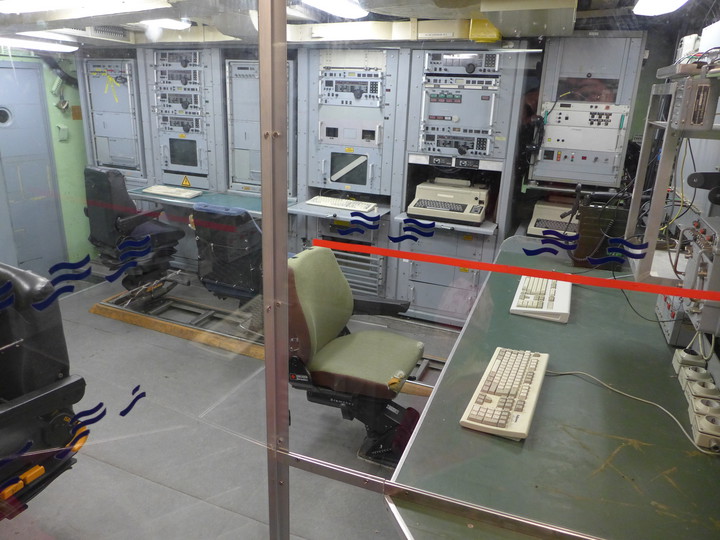
The radio room.
Besides the Mölders there are two other ships which can be visited inside and outside. One is the minehunter Weilheim from which I didn't take photos because it was raining temporarily and later I forgot to. The other one is type 205 submarine U 10 which was on duty from 1967 until 1993:
U 10
Besides those there are a couple of other ships which cannot be entered and a lot of other items belonging to German Navy warships. Most of the from more or less modern ships from after WW2:
Twin mounted 40mm L/70 Breda 1958/II AA gun used on different frigate, destroyer and replenishment ship classes
RBU-6000 depth*charge launcher used by the Sowjet Navy and GDR Volksmarine
100mm L/50 gun turret used on Köln class frigates and Hamburg class destroyers
Type 131.423 small torpedo-speedboat on duty from 1976 until 1989
Besides those exhibits there's memorial for the soldiers of the 2nd 'Matrosendivision' (Seamen's Division) on the area of the Navy Museum. It was built even before WW1 on another place but was transferred to this new site in 1960. It bears the names of seamen who lost their lives on duty on several ocasions between 1878 and 1911:
Inside the museum's building there's a permanent exhibition covering the history of the German Navy from the 1600s until WW2. Unfortunately space is very limited there and the history of Germany's navy isn't by far as excessive as that of other Nation it's a rather small collection. The exhibits are nice never the less but not too numerous:
Großadmiral Alfred von Tirpitz - Father of Imperial Germany's armament
Uniform of a general-adjutant to Kaiser Wilhelm II.
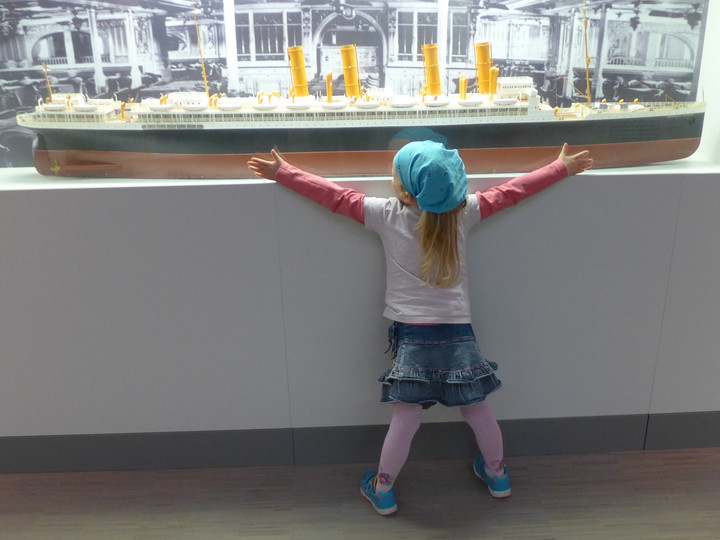
Very nice are the model ships that are exhibited everywhere. They are all 1:100 scale which is around 15mm wargaming scale. On the one hand that gives an excellent size comparison and on the other hand it made me think of 15mm land sea scenarios with those models...
Heavy cruiser Scharnhorst, 1907 - 1914
Battleship Bismarck, 1940 - 1941
Really large models there...
U 139 'Kapitänleutnant Schwieger', 1918
Currently there's a special exhibition about SMS Emden which is well known for its heroic landing party which was lost on the Cocos Islands while the ship itself was sunk in a naval battle by HMAS Sydney on 9th November 1914. However those men made there way back home with simplest means and against all odds.
1:100 scale model
Replica of SMS Emden's bell. The original is in the Australian War Museum in Canbarra.
This was only a small selection of the interesting things the museum has to offer. To my mind 11.50€ is a rather fair admission fee. For navy enthusiasts it's a place to visit without any doubt but even more peaceful minds will find something worth visiting. This time wonderful Mrs Monty wished to go there and give good old Mölders a closer look.

Anyway tomorrow I'll head home with a couple of bees in the bonnet. After this day in Wilhelmshaven the idea of 1/1200 naval battles is floating around my head. Maybe this becomes the next side side side project...